


HBO Max did not arrive in the UK as a challenger but as a latecomer, completing Warner Bros. Discovery’s European rollout on March 26, 2026, in a market where Netflix has been a fixture since 2012, Amazon Prime Video since 2014 and Disney+ since 2020. British viewers spent years watching HBO’s best shows through Sky Atlantic, building genuine affinity for content they could not yet subscribe to directly. That history gives HBO Max a recognisable name but name recognition and platform adoption are two very different things and in a market this crowded, the gap between them does not close on its own.
Late market entry means you cannot afford a quiet launch. You need immediate visibility in the environments where British viewers are already making their daily watch decisions and that makes home screen placement on day one central to your launch strategy.
In our 2nd edition of Above the Fold, in partnership with Looper Insights, we tracked HBO Max’s merchandising tactics and performance on launch day across several UK TV environments focusing on homepage banners, featured rows and promotional integrations.
Today at a glance:
Sky Q and what dominance actually looks like
Two platforms, two theories of conversion
Sky Q and what dominance actually looks like
Sky Q delivered the most valuable placement of launch day according to Looper Insights. HBO Max secured multiple consecutive positions within a high-traffic discovery row on Sky’s homepage, a takeover format designed to cluster placements at the primary entry point. The creative centred on Sky and HBO Max co-branding, anchored by the message “HBO Max is now included” reinforced by clear pricing and recognizable flagship titles. The goal was activation among Sky’s existing pay TV base.
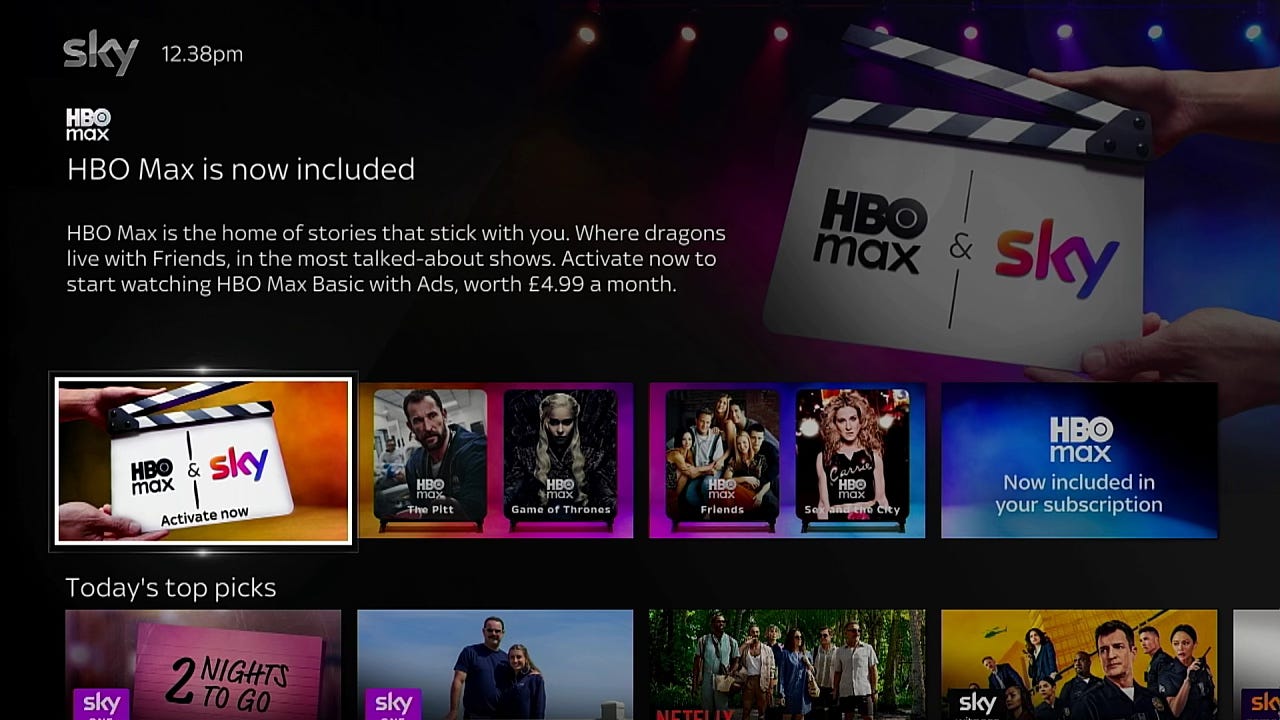
Nothing on Sky’s homepage gets there by accident and nothing gets there for free. That row belongs to Sky. HBO Max either paid to occupy it, traded access as part of the broader commercial arrangement covering Sky subscribers’ ad-supported tier, or, most likely, some combination of both baked into the deal. The Looper data captures what those placements were worth in measurable terms and the full figures are in this report. What the headline picture makes clear is that Sky Q was not simply HBO Max’s best-performing platform on launch day. It was the platform where they concentrated their commercial firepower deliberately.
The logic behind that decision is clear. UK Sky pay TV subscribers get HBO Max's Basic with Ads tier included in their existing subscription as part of a commercial arrangement between the two companies. Both parties have a shared interest in driving activation from day one: HBO Max needed activation among Sky's existing base and Sky needed its subscribers to see value in what their subscription now included.

Two platforms, two theories of conversion
Fire TV and NOW TV both dedicated homepage placements on launch day and the contrast between their approaches is worth understanding.
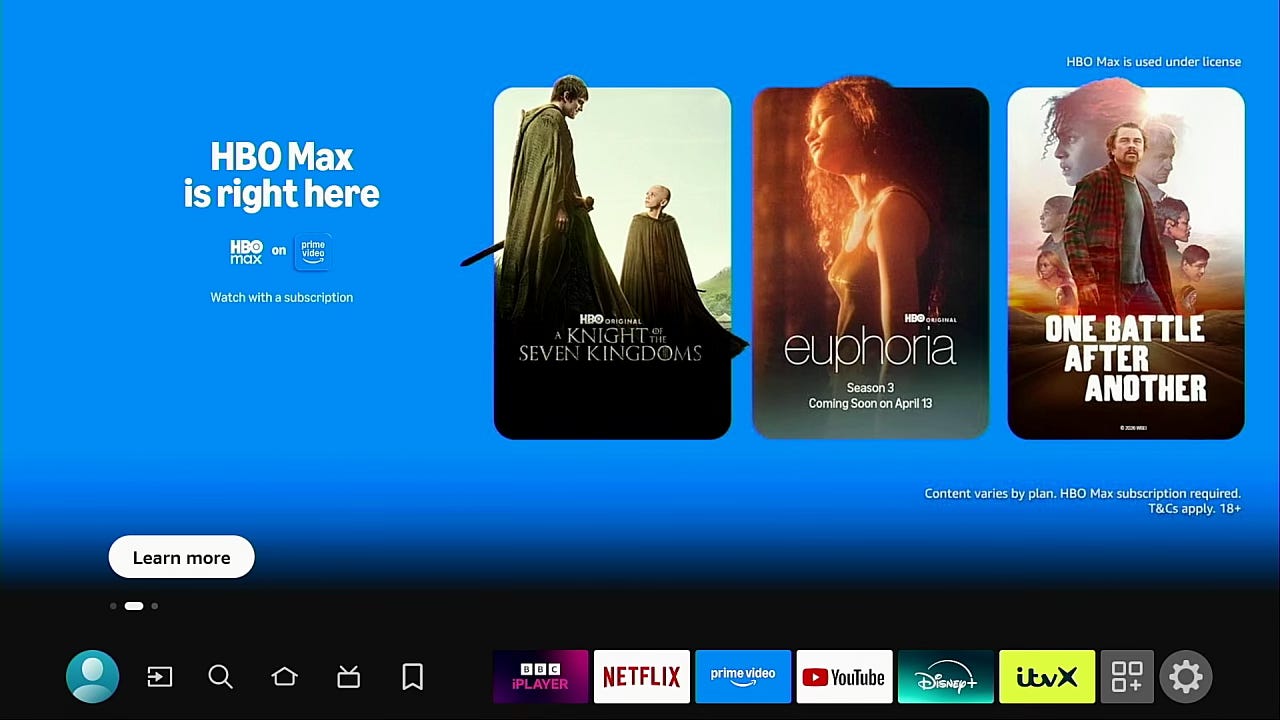
Fire TV went narrow and deep. The creative used a clean, high-contrast backdrop with bold “HBO Max is right here” messaging, Prime Video co-branding to reinforce accessibility and a selection of recognizable titles to anchor the value proposition with content viewers already knew or were curious about. The underlying argument was simple: if you know what to look for, we are making it impossible to miss.
NOW TV went in the opposite direction. Rather than leading with individual titles, the creative emphasised catalog breadth through a collage-style visual and the message “HBO Max is included with NOW, one app, one price.” The focus was integration and ease of access, positioning HBO Max as a natural extension of the NOW ecosystem rather than a standalone destination requiring a separate decision.
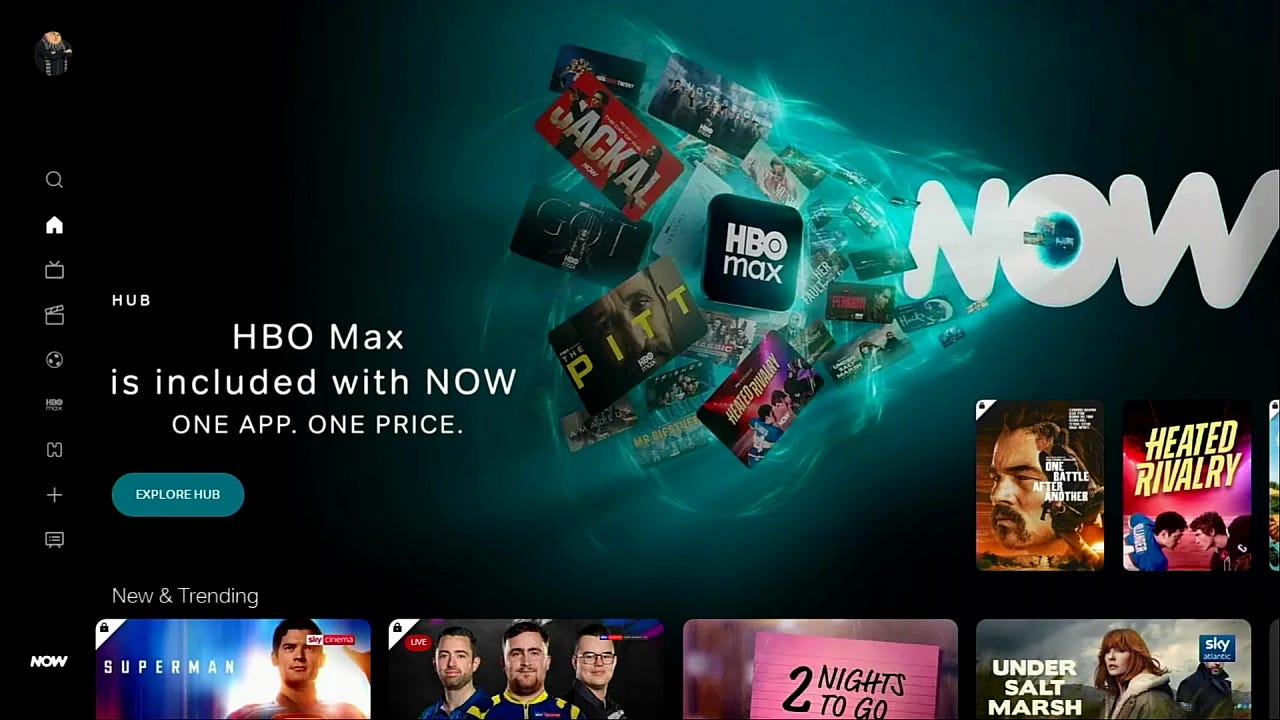
Where Fire TV bet on franchise recognition to drive clicks, NOW TV bet on simplicity and value clarity to reduce friction at the point of entry. These approaches reflect different assumptions about where each platform’s audience sits in the decision process and which argument closes fastest given the existing relationship between that viewer and that platform.
What the Looper Insights data captures is the opening move, three platforms, three different commercial and creative approaches, all measured on the same day against the same objective. March 26 was the “easiest” day. From here, HBO Max has to earn its place on those home screens every single week.
The full picture, including placement values, impression volumes, creative analysis and the complete £MPV and pMPV figures across Sky Q, Fire TV and NOW TV, is in the Looper Insights report, available for download here.
That’s it for today. Comments, shares or likes come a long way 🙏🏻
Catch up on our previous reads:


🗳️ Poll Time:
Enjoy your weekend and see you next week for another edition of Streaming Made Easy!