

For three years, nobody advertised to children under 13 on Roblox. The platform banned it outright in 2023 under pressure from child-safety campaigners and the door stayed shut. Then this spring Roblox rebuilt its entire approach to younger users. In April, it introduced Roblox Kids for ages 5 to 8 and Roblox Select for ages 9 to 15, tightened age verification and in June it named the company allowed to bring back ads to under 13s on their platform.
That company is SuperAwesome. I met Nicholas Walters years ago and we were due a catch up following the partnership announcement. I wanted to understand why a firm few people have heard of just became one of the sole gatekeepers for one of the largest audiences on the internet (over-13 users are PubMatic’s and Google Ad Manager’s purview). Roblox counts 144.5 million daily active users and among those who have verified their age on the platform: 35% are under 13, a scale that makes the segment too large to leave unmonetised and too sensitive to monetise carelessly.
Walters runs the business day to day and the case he makes is simple. Kids and family content is enormous and underfunded, the money that should flow to the people making it keeps getting blocked by exactly the compliance questions SuperAwesome exists to solve.
Today at a glance:
Proudly commercial
The contextual bet
Inside Awesome Intelligence
YouTube 2016, all over again

Proudly commercial
Walters is direct about what SuperAwesome is for. The internet, he argues, was never built with anyone under 18 in mind and fixing that means solving privacy and safety at the same time as solving money.
“We are proudly commercial. If you can’t get money flowing into the people who make good content, there will be no good content.”
Nicholas Walters, SuperAwesome
That is the same flywheel argument Gregory Dray made to me about YouTube kids content a few weeks back. Advertising, influencer partnerships, gaming and now Roblox all serve the same function for SuperAwesome. Give brands the confidence to spend against under-18 audiences and the money moves from brand budgets to the creators actually making the content those kids watch.
The scale of the problem this is meant to solve is not small. On YouTube alone, Walters reckons there are maybe 125 million people who could call themselves a creator of some kind. Finding the right ones and proving they are safe enough to fund is the entire business.
The contextual bet
SuperAwesome’s answer to the targeting question is to not target individuals at all.
“We have no interest in targeting individual users. We don’t use cookies, we don’t collect email trackers. We are solely about building the smartest contextual data platform we can.”
Nicholas Walters, SuperAwesome
Contextual advertising places ads by what is on screen, not who is watching. What is contextually relevant to a 16 year old is nothing like what is relevant to a 26 year old and getting that granularity right across every age band under 18 is hard.
Co-viewing complicates the picture, since a huge amount of youth-directed content gets watched by the whole household. SuperAwesome’s answer was to acquire the world’s largest youth-directed podcast network at the start of this year, betting that co-listening / co-watching families are worth reaching through kids’ content.
Inside Awesome Intelligence
Awesome Intelligence is the data layer under everything SuperAwesome does, built to fix what it calls youth data scarcity. Privacy law bans tracking anyone under 18, so brands have been targeting kids based on age and gender, nothing else.
SuperAwesome swaps that for values, passions, fandoms, trends thanks to 13 years of campaign data, 9 million-plus research inputs, 150-plus studies.
On YouTube it runs two checks at once. One classifies 125,000 channels for brand safety and audience fit. The other watches channels daily, AI plus humans, so the list doesn’t go stale.
The real test is off YouTube: Roblox, Minecraft, Fortnite, the “unstructured, UGC-driven” chaos where under-18s actually live and where age and gender explain nothing. SuperAwesome’s bet is that the same audience profile travels with a brand from YouTube into a game.
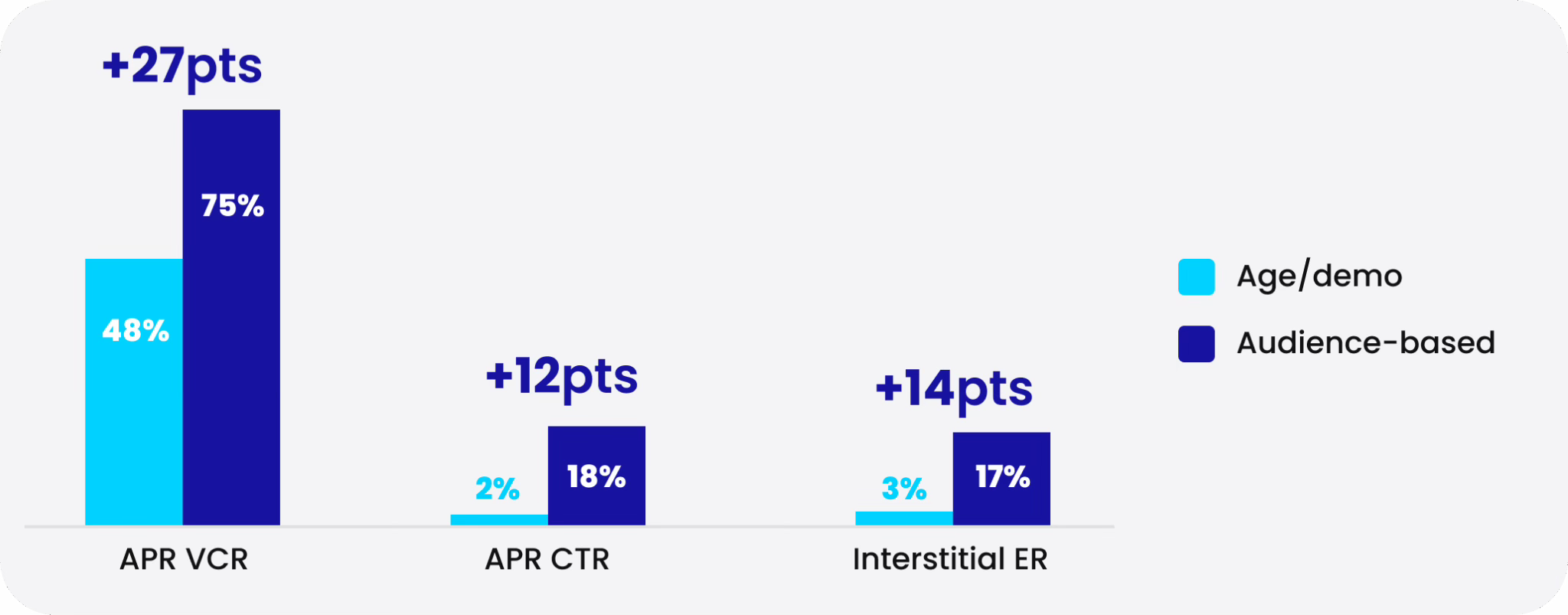
Nickelodeon is one proof point. In Germany, for the launch of The Thundermans: Undercover, SuperAwesome ran an audience-based strategy against a standard age and gender control group, split across two segments: Pop-Culturists (41% core passion for entertainment) and Classics (49% define themselves through their digital identity). Both segments named The Thundermans as a fandom before the campaign even launched.
The lift was real. Video completion rose 27 pts, click-through 16 pts and interstitial engagement 14 pts.
YouTube 2016, all over again
“Roblox is the breakout digital platform for this decade. I have very strong YouTube 2016 vibes on this platform. The usage is undeniable, users have made their choice, they have escape velocity in terms of engagement. This is what escape velocity looks like.”
Nicholas Walters, SuperAwesome
The numbers back the comparison. SuperAwesome puts weekly gaming activity among Roblox’s under-13 users at 98%, which makes Roblox less a platform for kids than the default environment they live in. The structural problem is identical to the one SuperAwesome already solved once on YouTube. Roblox now permits advertising to all ages across hundreds of thousands of user-built experiences, spanning fashion games, sports games, driving games, creation tools and role-play, with new experiences launching daily. A brand faces the same question it faced on YouTube in 2016: which of these environments is safe, and which one actually reaches the audience I want?
SuperAwesome says its team manually plays every title and scores it against 11 brand suitability flags, catching realistic weapons or graphic violence that metadata alone would miss. That's a genuinely large ask given 15,000 new games launch on Roblox daily and it's why Awesome Intelligence layers on 80-plus contextual categories on top, so a brand can target a specific interest instead of a blunt age band.
Kids content is YouTube's lowest-earning category and the plumbing to sell premium kids inventory still isn't built. SuperAwesome's classification engine has run on YouTube the whole time, which tells you the bottleneck was never safety data. It was a platform willing to build a selling machine around it. So will Roblox do what YouTube didn't?
That’s it for today. See you on Thursday for another edition of Streaming Made Easy!