

🤖 Your AI streaming guide is guessing
LLMs aren’t ready to be your content discovery layer, not even close. ChatGPT scored 43.76% accuracy on streaming availability. Claude 50.21%. Reelgood 96.89%.
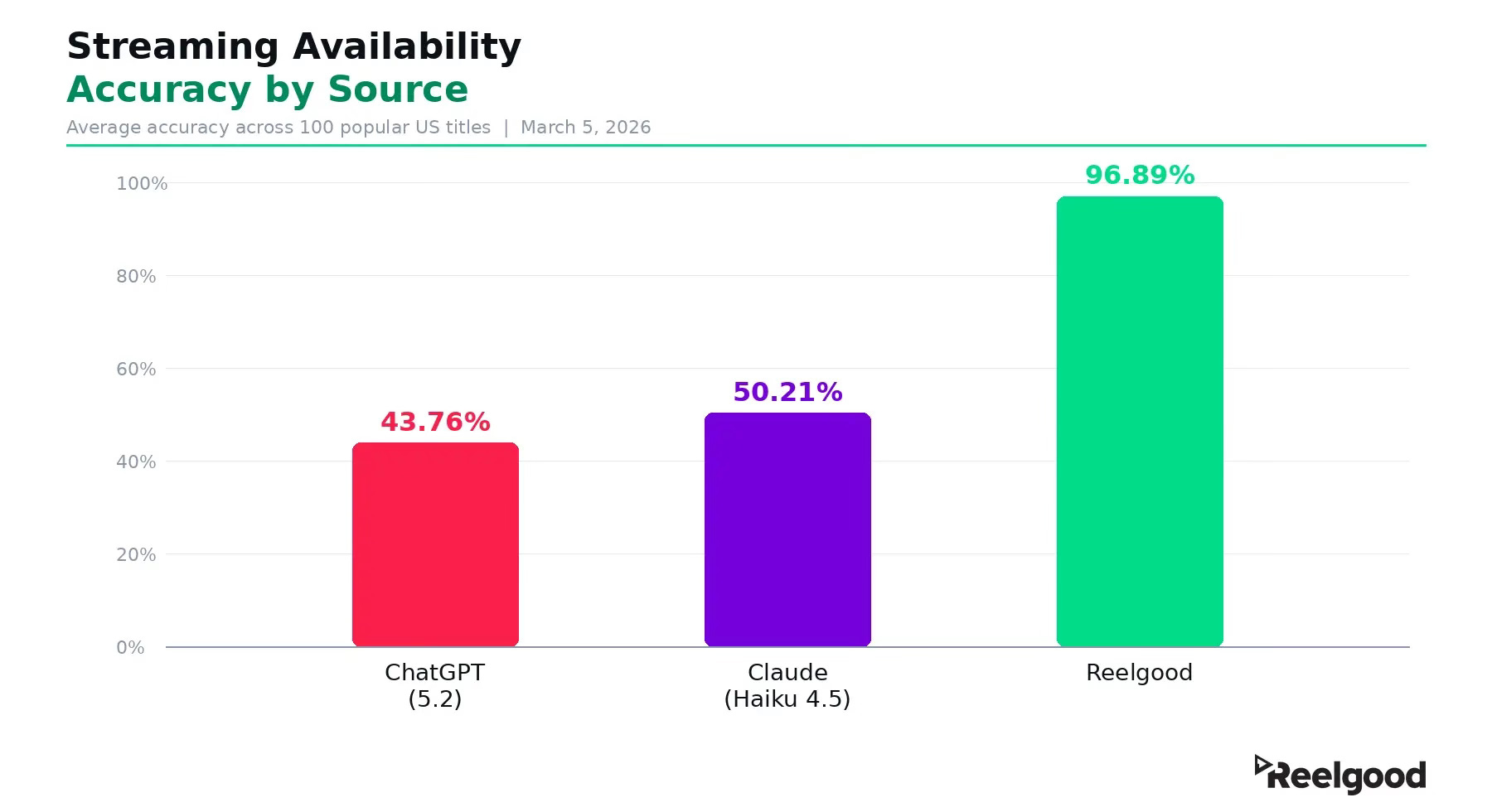
Yes, Reelgood ran the test and Haiku is not Anthropic’s most capable model but it’s still useful to have some hard numbers and not just my personal experience testing LLMs for content discovery.
Why such a low accuracy? The report highlights 6 reasons, from stale availability to add-on confusion to TVOD blindness.
As AI assistants position themselves as the front door for content discovery, it’s crucial to remember that like everything they’re only as good as the data they learn from.
LLMs can’t do this alone which begs the question: what should the video streaming industry do about it: accept they will play a part in content discovery and collaborate with them or protect itself from them?
More details in the report can be found here.

📱The French mobile price war is over
When Illiad/Free entered the market in 2012 with a €2/month mobile subscription, it triggered a decade-long price war that reshaped French telecom.
Fast forward to 2026, Orange, Bouygues and Iliad are buying SFR for €20.35B and splitting it three ways. The deal was signed on June 6 with definitive agreements expected in H2 2026 and closing in H2 2027 at the earliest, pending regulatory approval in Paris and Brussels.
For the streaming industry, this deal is bigger than mobile tariffs. When those assets get absorbed by Orange, Bouygues and Iliad, France ends up with three telcos (with higher subscriber counts) that are also three of the country's most powerful content distribution gatekeepers. Distribution economics, home screen placement all shift. Streamers operating in France need to pay close attention. The UK already went through this with the Vodafone/Three merger while Spain, Germany and Italy still have four-player markets.
The European telco map is being redrawn, one merger at a time. The streaming distribution map will be redrawn with it.
What will the French market look like post-purchase? Find out in our latest infographic.
🎥 Auto-Tune, Teslas and five SVODs on Amazon
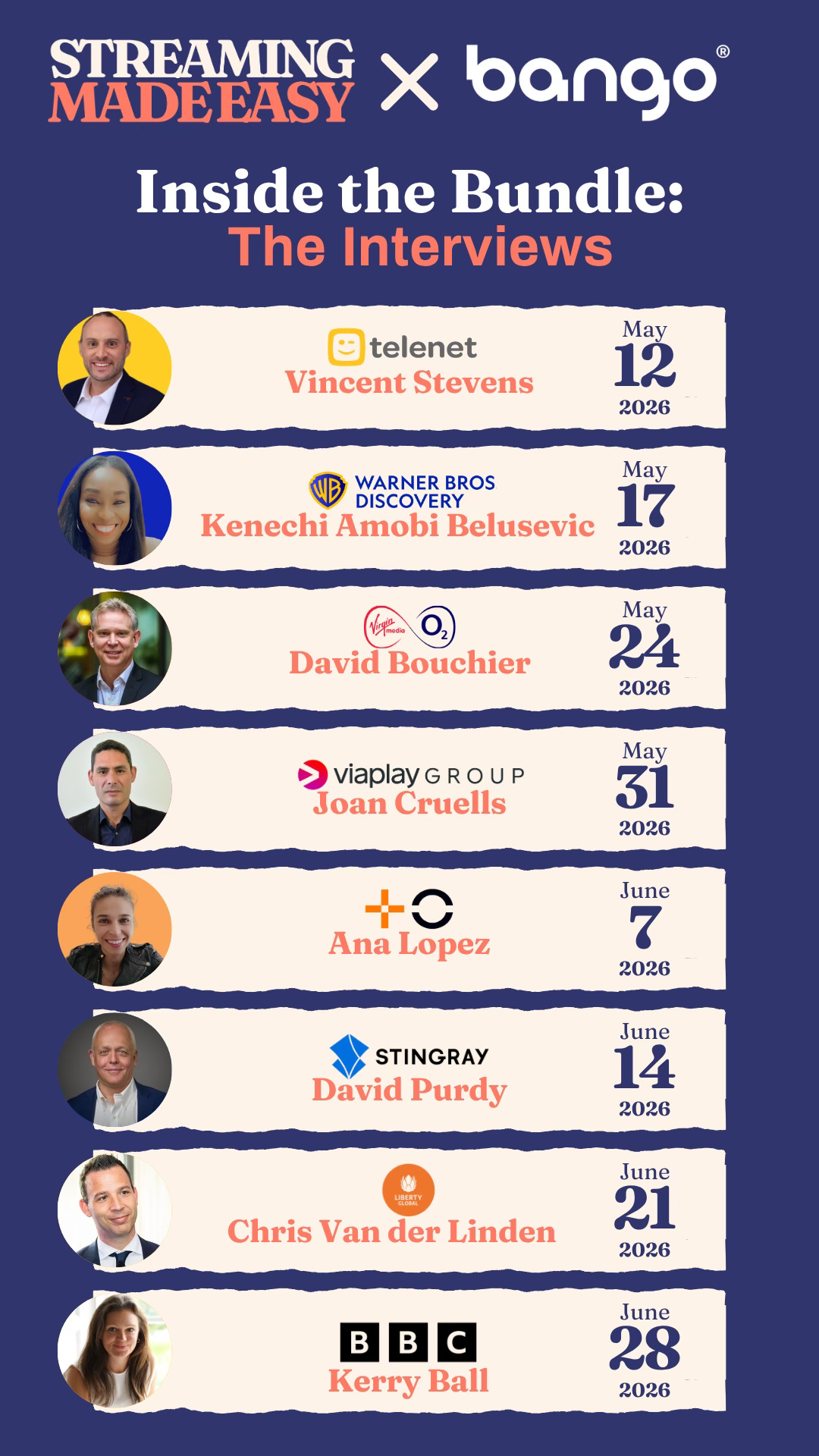
For this episode of Inside the Bundle, in partnership with Bango, I spoke with David Purdy, CRO at Stingray, on how a Canadian music company became a multi-vertical streaming operation, what the old cable model got right (and what it got wrong) and where the next bundle bets are: gaming platforms, mobile operators, car dashboards.
He also has a view on why telcos have spent 20 years trying to crack content and never pulled it off. For that one, you’ll have to press play.
Watch the full episode here:
Previous episodes: David Bouchier, Kenechi Amobi Belusevic, Vincent Stevens, Joan Cruells, Ana Lopez.
Coming next: Chris Van der Linden.
📺 The last gatekeepers?
TVREV has a name for the media landscape we’re all navigating: Feudal Media. Thousands of disconnected content bubbles, each with its own celebrities, inside jokes and source of truth, all largely unaware of anything outside them.
In the middle of this sits the TV operating system: the home screen viewers see when they turn on the set, the recommendation engine that tells them what to watch next, the ad platform that decides which brands reach them. The last remaining gatekeeper according to Alan Wolk and the TVREV team who have mapped the battle for that layer in a new report covering the major players, the role of FAST and home screen advertising, what AI will and won’t change.
It makes for the perfect Sunday read.
🎙️ How to cover the World Cup without live rights
The Overlap built a 1.7 million subscriber business without buying live rights. Scott Melvin is clear on this: they did not avoid live rights by strategy. The cost is simply prohibitive. You either go all in or you cannot play. So they built around what live rights cannot give you: the conversation around the game. During this episode, we get into:
→ What the Bundesliga actually handed over;
→ What happened when they looked at the social numbers against the live, and what Scott made of the gap;
→ What Global's capital made possible;
→ Why they acquired Mark Goldbridge's channels rather than building from scratch;
→ Why growing a YouTube channel to 1 million subscribers today is a different exercise than it was 5 years ago.
Blueprint or exception?
👉🏻 APPLE PODCASTS | SPOTIFY | YOUTUBE | DEEZER with more platforms here.
📦 Disney+ France's super aggregation moment
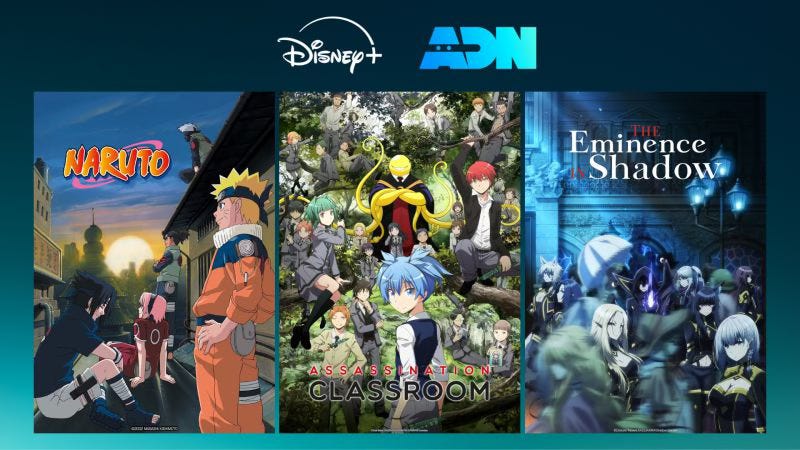
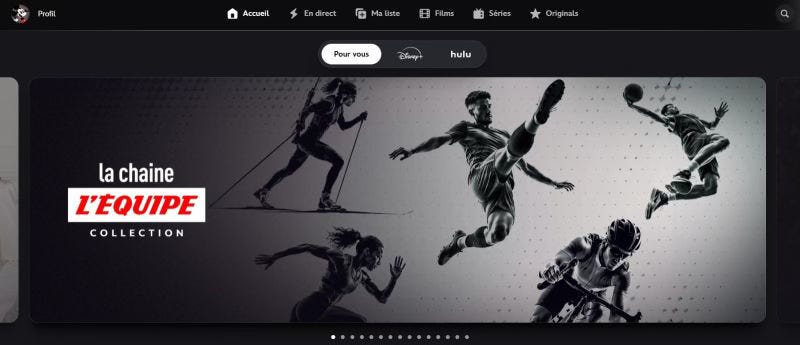
Disney+ announced a partnership with ADN (Animation Digital Network) to add 1,500+ episodes to its catalogue including Naruto, Assassination Classroom and The Eminence in Shadow, plus new simulcast titles from Japan and the co-production of originals. The TV channel L’EQUIPE joins the same week, both at no extra cost to subscribers.
Disney is not prepared to let the super aggregator play in the hands of Amazon and Netflix. Disney+ is pulling in third-party catalogues and live TV under one subscription without touching the price. The theory is familiar: centralise enough of what viewers want and they stop looking elsewhere.
The question is whether Disney+ can do this without becoming a generic bundle. ADN's community credibility took 13 years to build. Crunchyroll crossed 21 million paid subscribers by running an anime-first product with no distractions. Slotting 1,500 episodes into a general entertainment platform still leaves the community-building to do. French viewers already have L’Equipe for free (across their owned and operated platform, on TNT, on telco platforms and even inside TF1+). Disney+ gets the tidiness of one app, not a genuine content advantage.
Disney+ doesn't pull in third-party anime and a free-to-air sports channel because its own catalogue is doing enough in France. Marvel, Star Wars and Pixar drove the initial subscriber wave. Without a steady flow of new tentpoles, and with Netflix set to launch its TF1 partnership, Disney+ needs content that brings viewers back weekly rather than only when the next big release drops. Live sport and simulcast anime both do that.
That’s it for today but before you go: