


53 seconds. That’s how long it took me to get from the Prime Video home screen to a live subscription to the MHz Choice and Kino Film Collection bundle, $4.99 cheaper than buying the two separately.
That’s the whole pitch of a platform bundle: quick to buy, cheaper than the parts, one bill. Roku launched more than 30 of them in September. Amazon sells about as many, and its newest, a $29.99 five-pack, offers 39% off.
Roku and Amazon have sold standalone subscriptions for years. Now they’re aggressively launching bundles, which tells me they are more determined than ever to become the default SVOD aggregators.
So why this move? What are Roku and Amazon putting in those packages? How aggressive is the pricing? Who’s missing? Let’s find out.
Today at a glance:
Half of subscribers bundle, and in Europe telcos lead
Roku and Amazon build their bundles from specialty services
The pair missing from those grids gets a bundle date
Specialty grows faster than premium but churns faster too
Roku and Amazon can bundle streaming, but telcos keep the connectivity edge
Half of subscribers bundle, and in Europe telcos lead
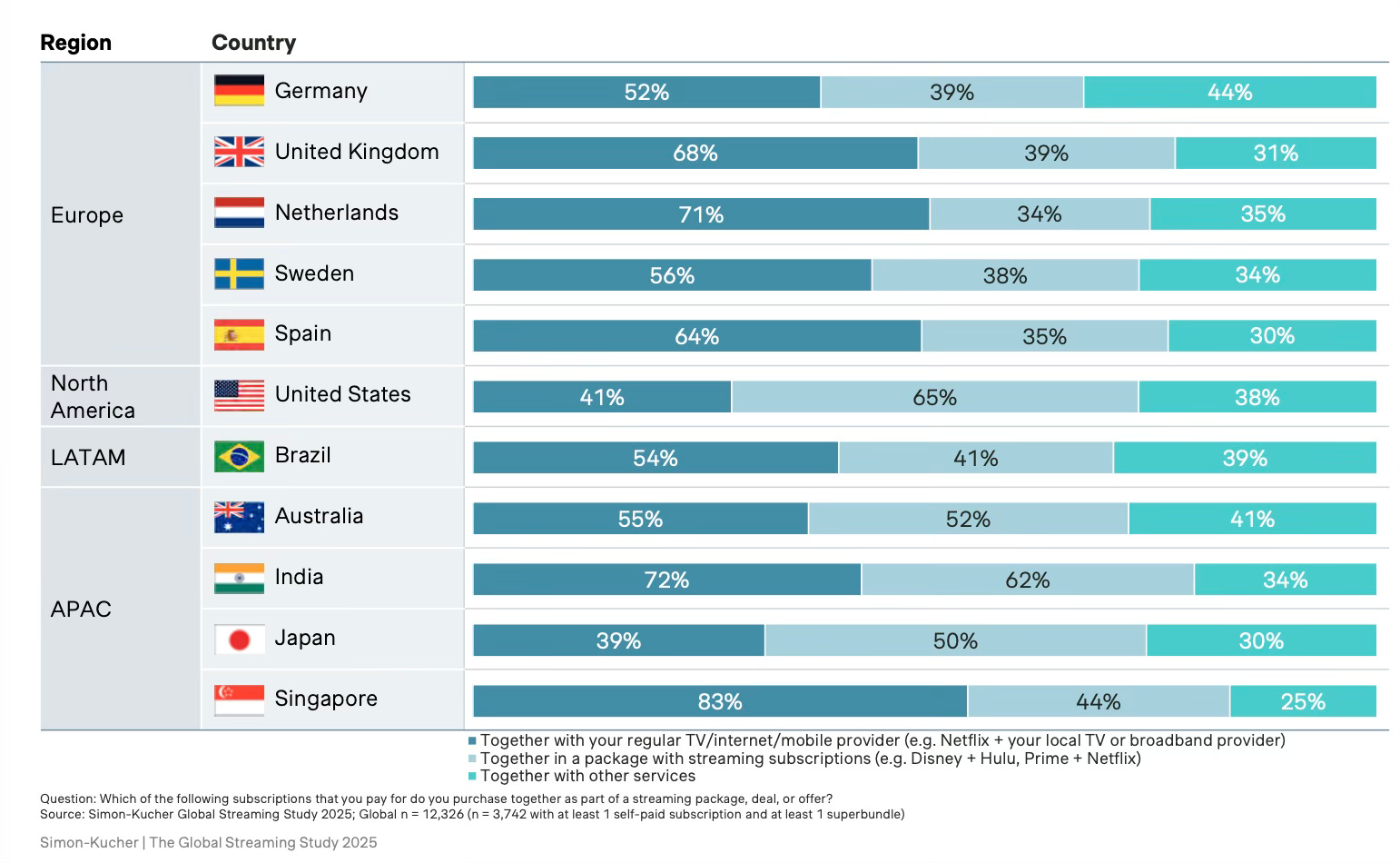
Simon-Kucher’s 2025 Global Streaming Study puts 51% of paying subscribers on at least one streaming service bought as part of a package, a deal or an offer (base: 7,242 paying subscribers in 11 countries).
A telco package is the most common type in all five European countries in the study, from 52% of bundle holders in Germany to 71% in the Netherlands.
The US and Japan are the exceptions. In the US, 65% of bundle holders have a package with other streaming services, against 41% with a telco, and in Japan it’s 50% against 39% (respondents could pick more than one type).
Bango’s Subscription Signals 2026 report puts the average American at 1.9 indirect subscriptions out of 5.2 (2.2 out of 5.7 subscriptions in the UK) and mobile providers (35%) are the top source (base: 4,000 US and UK consumers in January 2026). 31% of Americans say they’re done with standalone subscriptions and 48% expect their subscriptions to come with their internet, TV or mobile plan.
Those two numbers describe an opening for whoever can put services together on one bill. Roku and Amazon don’t sell the internet or the mobile plan a telco package is built around. Amazon says its Leo satellite internet service starts consumer service later this year, and that it will pair it with Prime, Eero routers, Fire TV and Ring. For now, the package both can build is one of streaming services. So what are they actually offering?

Roku and Amazon build their bundles from Specialty services
I’ve already covered at length what Roku and Amazon sell on a standalone basis:


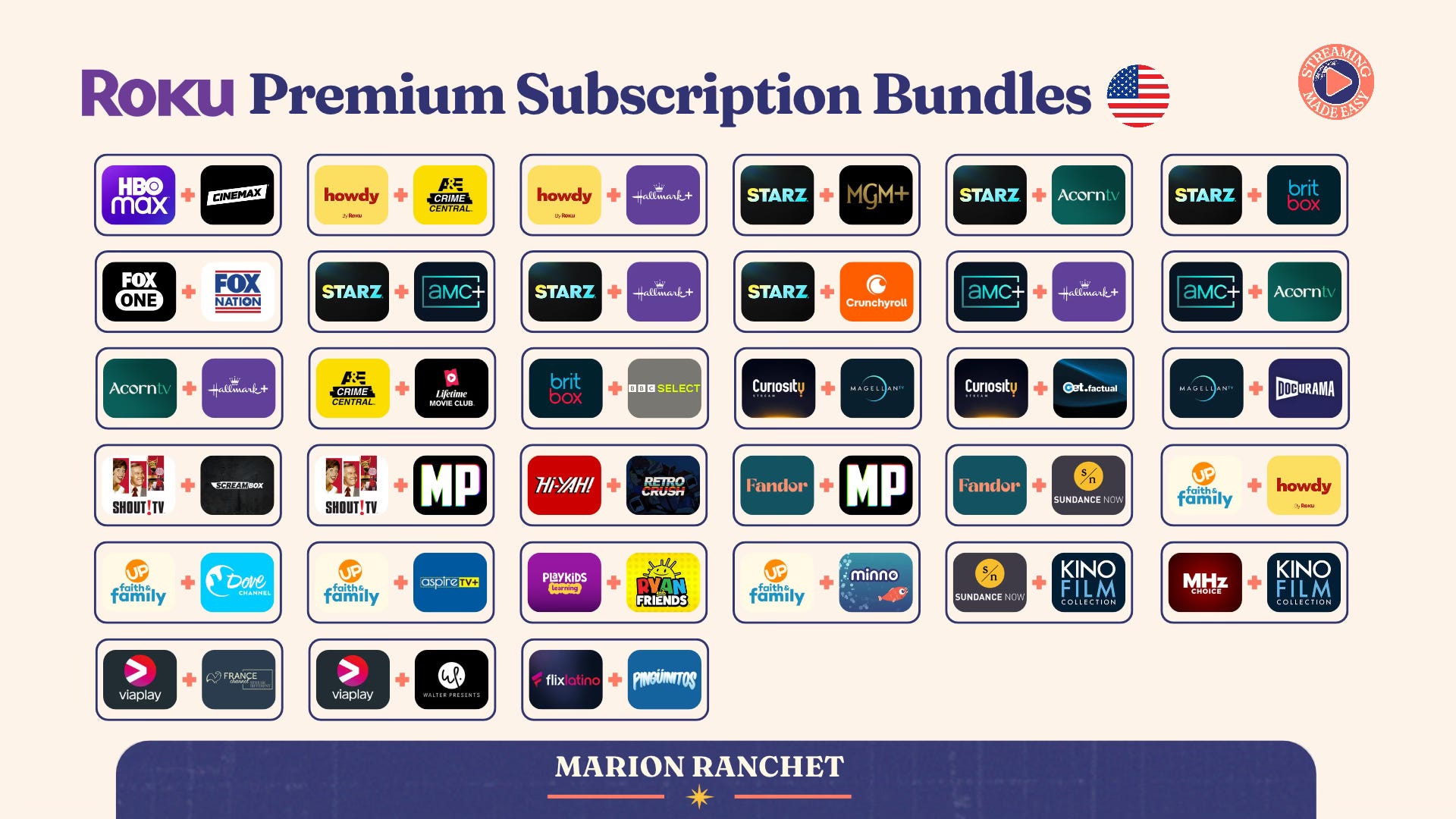
Bundles are a new way for them to own a bigger piece of the subscription economy. Here’s what their bundle value propositions look like today:
Roku launched 33 bundles in September.
Amazon sells 21 in the US (another 9 in Europe).
