

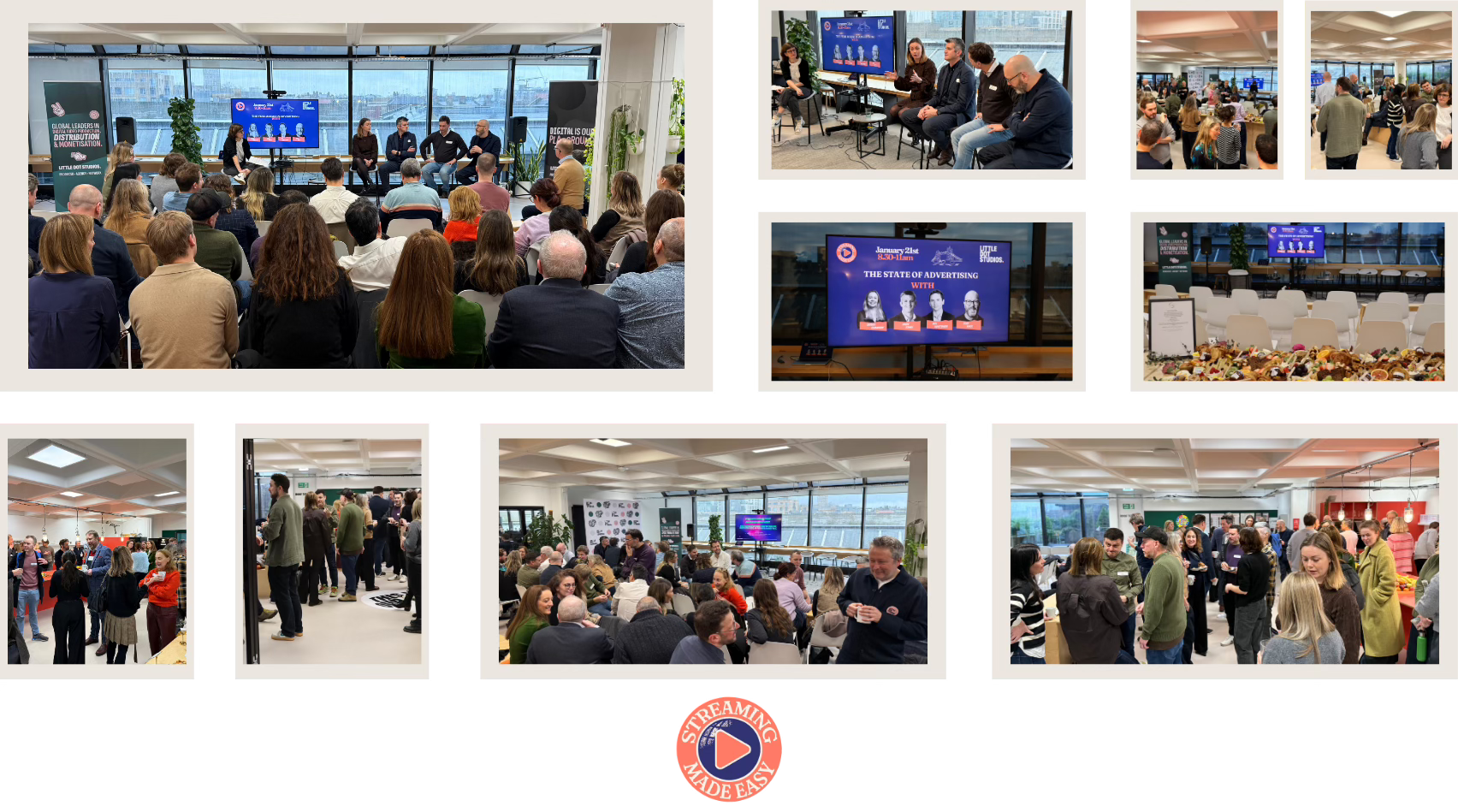
I have a confession to make. I wanted to learn more about the state of advertising in 2026 so I put together a panel to pick the brains of people who live and breathe this stuff daily. Content and distribution folks like us have spent years focused on premium subscriptions and windowing strategies. We didn’t need to understand the ad ecosystem in depth. That’s changed. Our businesses have gone hybrid. What happens in the ad market now shapes everything from greenlight decisions to platform strategy.
So I gathered four experts with very different vantage points: Ian Whittaker (Liberty Sky Advisors), an equity analyst turned media advisor who looks at the sector from a macro lens; Toby Hack (RTL AdAlliance), formerly running agency PhD across EMEA; Sarah Chinnery (Little Dot Studios), heading up advertising partnerships; and Andy Jones (PubMatic), looking after European CTV.
Here’s what they told us:
The headline numbers hide a brutal & disparate reality
Agency land is messier than it looks
AI is already reshaping media buying
The YouTube TV money debate (again)
The magic wand question
What this means for you
P.S. : If you attended, please take a moment to fill out a quick survey.
P.P.S. : A massive thanks to Little Dot Studios for hosting us. Attendees got goodie bags and their Trends ebook, grab the ebook here and make sure to come in person for our next Streaming Made Easy event.
The headline numbers hide a brutal & disparate reality
The top line looks stable. Corporate profitability remains healthy, S&P 500 earnings growth for 2026 sits in the high single digits and brands still need to advertise when they’re pushing price increases on increasingly annoyed consumers.
But Ian Whittaker offered an iceberg analogy that reframes the picture.
Think of the ad market in two layers. Above the waterline sits traditional corporate spend: the P&Gs, the Unilevers, the brands everyone tracks and talks about. Below the waterline sits SME spend: small and medium businesses collectively representing close to half of global advertising by Whittaker’s estimates. That money is invisible, nobody reports on it, nobody knows the rates.
“Those businesses don’t really know what the other people are spending, what rates they’re actually paying. It’s fairly opaque.”
This explains why digital platforms post much stronger ad growth than traditional media. It’s not just that they’re stealing share from TV. They’re capturing a massive pool of money that traditional media never had access to in the first place. For a small business owner, Google and Meta aren’t advertising channels, they’re the storefront itself.
Andy Jones put the scale problem in starker terms:
“80 to 90% of all new money in advertising is going into just four companies. And that should scare everyone in this room because it’s going into Google, Meta, Amazon, and TikTok.”
Why? Scale, performance proof and above all, ease of transaction.
Can broadcasters offer that ease? In the UK, Sky, ITV and Channel 4 announced a joint self-serve marketplace for SMEs last year, built on Comcast technology. It’s the industry’s most direct attempt to compete with Meta and Google for long-tail ad spend. Jones warned us on whether this would actually come to light in a big way (each party needs to get out of its own way and truly collaborate) while Whittaker flagged a marketing problem: SMEs don’t know this option exists.

Agency land is messier than it looks
Toby Hack spent years on the agency side and sees turmoil underneath the stable headlines.
“Publicis, I know there’s someone here from Publicis doing brilliantly winning everything, but potentially in putting themselves in quite a challenging place by the way that they’re winning everything. WPP we all know and love but is in massive disarray, evolving their business. Omnicom obviously where I spent an awful lot of time merging with IPG, and that is messy and complicated.”
The agency holding companies built their empires during the process era. Scale, efficiency, operational leverage. Now AI threatens to automate the very functions that generated their profits.
Whittaker connected the dots:
“If you think about the world for the past 40 years, it was very much about proficiency, scale, just in time, making things as efficient as possible. And that was very much the model of the agency hold. Where now does an agency have value? Because the ultimate goal is AI can do everything, which is why Mark Zuckerberg turned around and said, if you are a company, give us your credit card and run everything from start to finish in terms of your advertising.”
The implication for media agencies specifically is brutal. They’ve been profit engines for decades, often generating 75% or more of holding company profits. Now they have to rediscover value on the creative side.
Why does creative matter? Whittaker pointed to something CEOs and CFOs actually said on earnings calls during the 2022-23 price increase cycle: brand strength was the single biggest factor that let them push through those increases without losing customers.
